
Your Blue Bin: Put the Right Stuff in to Keep Contamination Out!
Properly sorting your waste at home means recyclable materials can make it to repurposing facilities and avoid the landfill. To help this process stay on track, haulers will place a tag on your blue curbside bin if it contains anything that isn't recyclable.
Why did I get a tag on my blue curbside recycling bin?
Oregon’s Plastic Pollution and Recycling Modernization Act (RMA) requires communities of a certain size, including Marion County, to create programs to reduce recycling contamination. As part of our efforts to help our community recycle effectively, local haulers will be leaving tags on residents’ commingled recycling bins if they contain items that don’t belong.
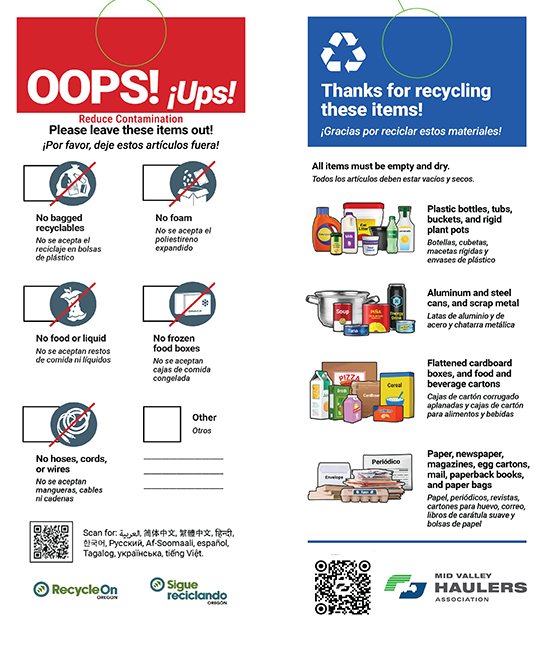

What should I do if I get a tag on my recycling bin?
Make sure you carefully sort your recycling so that materials can be repurposed and don’t end up in the landfill. On the front of the tag, your hauler will note what contaminant was found in your bin. On the back of the tag you’ll see a list of allowed items, or download our one-page recycling guide so you can be sure you’re putting the right stuff into your blue bin!

The first two instances of contamination within a six-month period will result in your recycling cart being tagged, along with a follow-up from your hauler. After a third contamination notice within the same six-month period, your recycling cart will not be emptied until you contact your hauler and receive additional education on the commingled recycling program.
Contamination FAQs
When non-recyclable items end up in the recycling stream, they’re called “contaminants”—and they can put entire truckloads of reusable materials at risk of being landfilled. That’s because these contaminants can ruin recyclable items, as well as damage equipment and pose a safety hazard to workers.
- Plastic bags and other film plastics
- Liquids and food
- Soiled packaging
- Styrofoam
- Plastic clamshells
- Garden hoses
- Wire hangers
- Textiles
- Diapers
- Electronics
- Batteries
Some of these materials can be recycled separately, but they cause significant problems when mixed with other items in commingled recycling.
When in doubt, throw it out!
If you’re not positive something is recyclable, it’s better to put it in the trash than risk contaminating other materials in your recycling bin. Always follow the statewide recycling guide and together we can help more of Marion County’s waste find a second life!
Additional Resources
Oregon DEQ Recycling Contamination page
More Sorting & waste Reduction Tips and Guides
Questions? Contact your hauler
Reach out to your neighborhood hauler for more information or to find out what additional recycling services may be available in your area. Not sure who your hauler is? Enter your address in the field below to see their contact information.